
In Thessaloniki, Greece, the 65th TIFF was a celebration of the countryside and all things animal.
A report by Angeliki Dekavala
Between October 30th and November 10th, 2024, the Thessaloniki International Film Festival, also known as TIFF for short, celebrated its 65th anniversary. Greek and international premieres and special screenings abounded in a stunning catalog that centered on the porous theme of “We, the monster”. There were side events too, including podcast series, immersive VR experiences, an art exhibition on this year’s monster focus, masterclasses with leading national and international figures in film, as well as the festival’s famous Agora section with various talks and seminars. Notwithstanding the thematic versatility and geographical scope, Greek films enjoyed honorary treatment in the 65th festival edition and seem to have won the hearts of the audience, too, with many of them being sold out – an unprecedented occurrence. I am a big admirer of the festival, and this year the experience was particularly intense, as my admission into the board of the Youth Independent Jury allowed me to watch 24 films in ten days: 18 in the Greek First Run Competition and six miscellaneous ones. Not all the movies impressed me. Some stuck with me deeply. Overall, and since my focus has been and still is on contemporary Greek cinema, it gives me great pleasure to see a rich scene emerge and find an eager crowd. TIFF#65, more so than most recent festival editions, put exciting Greek productions and co-productions front and center. Below are some of my personal highlights.
Harvest, dir. Athina Rachel Tsangari

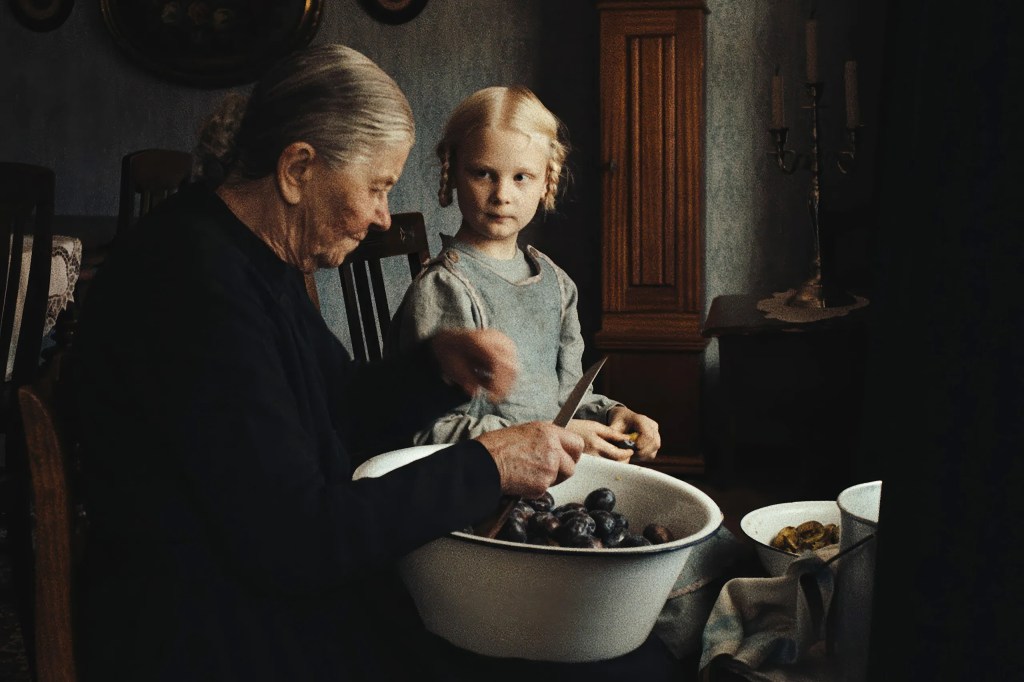
One of the special screenings this year was the new film by Athina Tsangari, based on the book of the same title by Jim Crace (2013). If Yorgos Lanthimos is considered the “father” of the so-called Greek Weird Wave, Tsangari is seen as the “mother,” having already established this title with her films Attenberg (2010) and Chevalier (2015). Yet this film, I feel, is kind of moving on from the themes and visual language of the Weird Wave to stand on its own legs. It hypnotically draws you in and urges you to invest in the colorful characters and become a part of the small village community. The way it’s shot and the 16mm film grain make for an amazing atmosphere, as the tensions slowly rise in the village. And even though Harvest takes place in what looks like medieval England, its messages remain contemporary. What made my viewing experience even more powerful was the Q&A session after the movie, where the director herself explained how this film was shot in a really “punk way.” Both the members of the crew and the actors were staying in the area of the shoot and rehearsing and preparing for a long time before production. This way, their shoot unraveled like a perfectly choreographed dance, while at the same time there was always some room for improvisation (for example, everyone had a mic on them at all times). Since her movie was shot on film, Tsangari only had about 3 takes for each scene. This, as well as the fact that all of the music acts in Harvest were live performances by the actors, came together into a beautiful cinematic feat.
This past August, MUBI acquired distribution rights to the film in the United Kingdom, Ireland, Germany, Austria, and Latin America. The film is expected to be released in Greece by Cinobo and Faliro House.
Meat, dir. Dimitris Nakos

Meat deliciously throws you into the politics of modern-day Greece village life and keeps you on the edge of your seat for its entire duration. It holds a dirty, cracked mirror right in the face of Greek society, addressing themes such as lack of accountability, toxic masculinity, the exploitation of minorities and the privileging of personal interest over human relationships. Meat is a thriller that puts handheld camera movements, the chilling score by Konstantis Pistiolis and set design to eloquent use, creating an amazing sense of suspense. The plot exposes the deep-seated pathologies and racist attitudes of contemporary Greek society in a not-so-subtle way that really works to engineer strong reactions on the part of the (Greek) audience. It avoids didacticism but still gives the viewer a great deal to ponder, primarily by being ethereally scary and yet seriously relatable at once. The actors’ performances sweep you away, while the directorial approach really cements the eerie mood.
Meat will soon be distributed in Greek cinemas by Feelgood.
Maldives, dir. Daniel Bolda

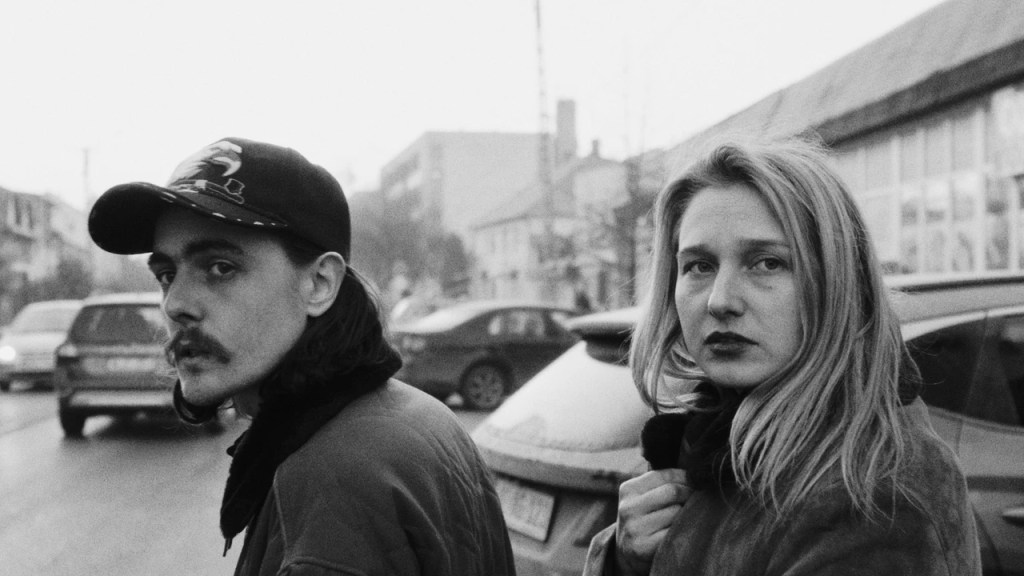
Also set in the Greek countryside, Maldives is a dramedy with thriller elements. It is a dark take on Greek nature that explores how the land might connect its inhabitants to the darker aspects of their existence. It stars Antonis Tsiotsiopoulos as an elementary music teacher. His everyday life with his dog Mary is pretty mundane, even though he seems to find comfort in it. He dreams of traveling to Maldives in order to escape his routine. One day his dog disappears and around the same time he starts seeing strange visions that challenge his perception of reality. The film offers a masterful blending of poeticism and humor. It was shot on 16mm black-and-white film, employing techniques that haven’t changed since the 1960s to convey the lowlight, moody atmosphere of a mountain forest town. Funny yet sad, dark but light and abounding in emotional and other contradictions, Bolda’s directorial vision hits the mark in his debut feature. The music, written by Yiannis Velsemes, complements the direction poignantly and could be considered a subtle mode of secret, forbidden communication between the main character of the film, a music teacher, and the audience. Though Maldives might give the initial impression of being simple, it delivers in both its technical and narrative aspects. This is deeply human cinema.
Killerwood, dir. Christos Massalas

With Killerwood, we are still moving within meta-comedy territory, but this time Massalas takes it up a notch, crafting a film around making another film. During the preproduction and shooting of a Greek murder mystery movie, called “Killerwood,” everything starts going wrong and the line between reality and fiction turns blurry for the actors and film crew. Shot like a “behind the scenes” documentary, or mockumentary, Killerwood captures the hilarious reality of Greek cinema. The film is written as a comedy of exaggerated characters who nonetheless feel real enough. And that’s precisely why Killerwood works; because instead of pointing fingers and exempting its director, writers and crew from the criticisms it has for the corresponding characters in the plot, it is suggestive enough to be read as a satirical reflection on its own production. It also effortlessly collapses genre distinctions, marrying homages to classic whodunits with thriller elements. Some of these references are very obvious and others more subtle, obvious only to veteran viewers. Could the film give the impression of an inside joke targeted solely at the industry and its workers? Maybe. But it remained a fun and delightful joke.
Kyuka: Before Summer’s End, dir. Kostis Charamountanis

Kyuka: Before Summer’s End is a film that hits hard and close to home. A single dad takes his adult twin kids on a boat trip vacation. What they don’t know is that he is planning a reunion with their long lost mother, in the same setting they used to travel to as a family, many years back. Set on a small boat on the coast of a Greek island, Charamoutanis’s sweet film uses all the tools at its disposal to plant its message simply and sparsely. The dad, brother and sister at the center of the story (all wonderfully acted) succeed both as stand-alone characters and as figures with specific functions within the dynamics of their family. Though touching upon various social issues, including queer identity, family, motherhood, and the male ego, the film does so temperedly and avoids obsolete or banal takes. During the instances of conflict, the boat works very well in conveying the claustrophobia and intimacy that reciprocally define the workings of the family. There are a lot of really comical moments in the film, too, as when the two families come together to eat and the fathers start one-upping each other in front of everyone. As the scene progresses, the editing becomes more quick with strategically placed cuts, to reveal and deconstruct the male toxicity inherent to this encounter. Overall, editing in this feature functions as a distinctive guide that converses with the viewer and the characters of the film. The cinematography and score shape a unique and fresh aesthetic reminiscent of the beautiful nostalgia of summer yet still conscious of its accompanying harshness.
The film has secured a theatrical release by Cinobo in 2025.
Arcadia, dir. Yiorgos Zois

Arcadia returns us to the darker underside of contemporary Greek cinema. It is a strong metaphysical drama that eloquently incorporates the familiar tropes of thriller, crime and mystery movies. Katerina and Yannis, both doctors in different fields, are driving together to a small seaside town, in order to identify the victim of a car accident. Nothing is as it seems in the eerie landscape of the off-season town, and a mystery starts to unfold. The key to reveal what is really happening lies in a weird old beach bar called “Arcadia.” As the pieces of the story start to fall into place, a haunting truth about love, loss and letting go becomes clearer. Yet the film also departs from its genre expectations, resisting a definitive resolution. Against my initial instinct of attempting to solve the mystery at the core of this peculiar world, I ended up giving into its strangeness, letting it take me wherever it wished to. This was also due to the performances by Vangelis Mourikis and Angeliki Papoulia, who are mesmerizing and seductive as Arcadia’s protagonists. All of the forces of the film, above all the editing and the old-school song choices, come together beautifully, orchestrating a multilayered sense of mystery. Yiorgos Zois knows how to keep a balance between suspense and emotional longing. His bittersweet beat imparts the sense that love can be manifested in a lot of weird ways. I want to hold onto what an audience member said after the end of the film, thanking the director for making all of us watching feel that there were more people with us in the room.
The film will be brought to theaters by Tanweer. It premiered at the 74th Berlinale.
What I find really unique in my experience this year at #TIFF65 is the way almost all of the Greek films communicated with one another. They all seemed to belong in the same parallel universes of either existentialism and grief or meta-comedy, while the Greek countryside enjoyed a central role in many of them. Delightfully, in some of the movies, like Maldives, there was also a collision of the grieving and the comical. Don’t get me wrong: I am not suggesting all of these films are identical, but I find it really interesting that this year’s competitors all dealt with very similar themes in their films. The various landscapes really aided this intercommunication, and so did the use of music in the films, particularly in the shared attempt of the scores to be much more than a series of catchy songs. It was as if music were a character of its own, conveying messages in a way I have only seen done in international cinema. Does this say something about a common core of Greek cinema, or the way we make films, or even the current state of the world? While that’s not for me to judge, I find value in the observation. And I took great pleasure in being able to transfer my thoughts from one screening to the next, seamlessly: to process this year’s films in the interstices of their interaction.

Leave a comment