
Emerging from a place of love for absurdist cinema and the magic of the everyday, Matthew Rankin’s latest pays tribute to many masters of the medium at the same time as it creates its own distinctive visual language in the interstices of brutalist architecture and romanticism.
A review by Angeliki Dekavala
In Universal Language (2024), director and co-writer Matthew Rankin manages to invoke both nostalgia and yearning for change, as he breathes life into an exuberant world full of in-betweens that occupies an imaginary place between Tehran, Iran, and Winnipeg, Canada. With what feels like a blend of a Wes Anderson, Abbas Kiarostami and Aki Kaurismaki daydream, this unique film finds its own voice, and asks a very important question: what place do people coming from two —or more— cultures call their home?
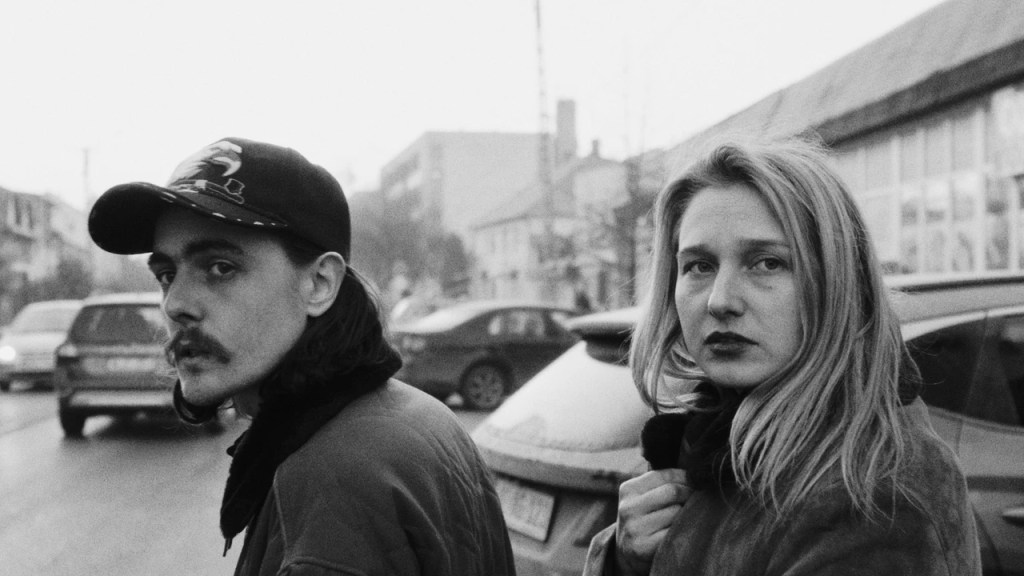
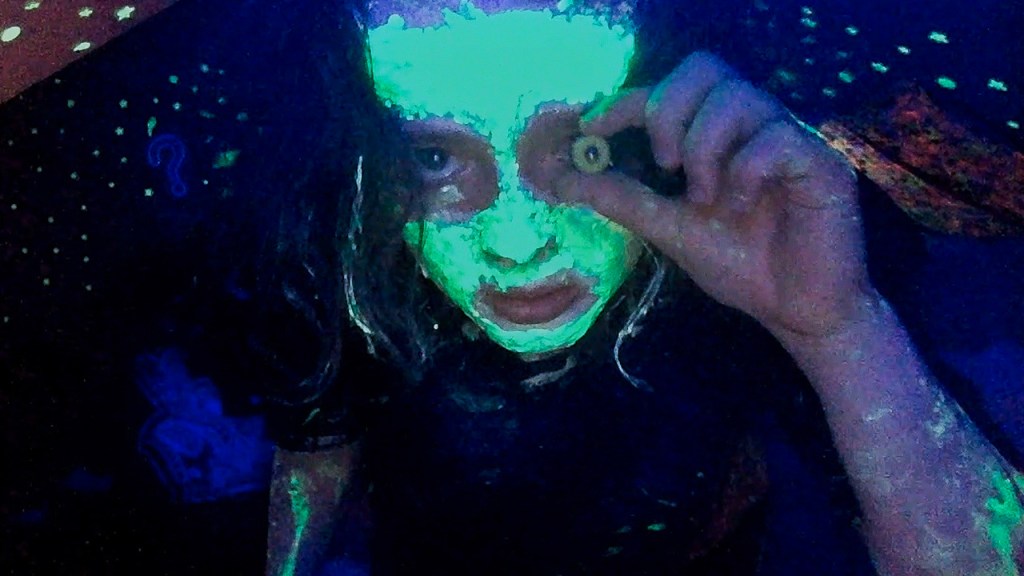
In the midst of freezing Canada, the film recounts three seemingly non-connected stories that end up coming together. It opens in the “Winnipeg Institute for the Intellectual Development of Children and Young People,” a very clear reference to Iran’s Institute for Intellectual Development of Children and Young Adults, better known as Kanoon, where Kiarostami helped establish a film department and later received funding for his first film, The Bread and Alley (1970). A teacher comes late to class, where we get introduced to smart, outspoken Negin, the main character of the first story. After the class ends abruptly and Negin makes her way back home through the infamous Grey neighborhood parking lot, she finds 500 riels that lay trapped on the frozen ground. She rushes to her friend Nazgol and they devise a plan to get the money out so they can help one of their classmates buy a new pair of reading glasses. We then cut to tour guide Massoud and the second strand in Rankin’s three-legged narrative. The story proceeds calmly, as we join Massoud’s group of very fed up tourists on a labyrinthine city tour that has no end in sight. Rankin plants absurdist, exuberant details onto this urban egg hunt: Massoud is seen raving about a briefcase on a bench —now declared a UNESCO world heritage site— in one scene, while another has him monologuing about the mural for a building in the historic Beige district where no one famous ever lived: only the good old unknown everyman.

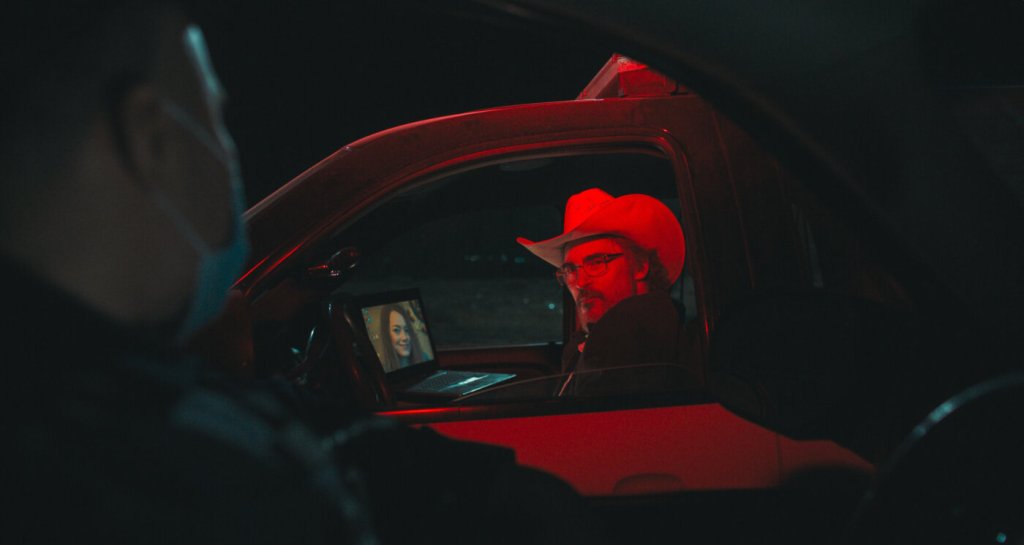
The third and final story stars the director himself as Matthew, a Québécois government official who decides to quit his boring job and buy a one way ticket to Winnipeg in order to track down his estranged Iranian mother. Along his journey he is confronted with many harsh realities, as he finds another family living in their old house and must then decide what place to call home. Born to Iranian parents in Canada, Matthew’s character becomes a cipher for the political complexities and existential uncertainties of a bicultural identity. Ultimately, Rankin’s film weaves a happy end out of its hero’s second generation conundrum: resisting to conform to either monoculture, he ends up embracing both and makes a home out of the excesses and contradictions of his in-between position.
In what is typical for modular storytelling, Rankin’s stories and characters all exist and interact in the same universe. One where time sort of stopped in the 80s, where turkeys win beauty competitions, and where the mundane grey and beige hues of brutalist buildings are rendered with as much love and care as Winnipeg’s people. The narrative twists and entanglements work wonderfully, in great part due to the skilled world building by writers Ila Firouzabadi, Pirouz Nemati, and Matthew Rankin. This is steeped in magical realist elements, from absurdism to delightful comedy, while offering a shrewd and sensitive take on the identity politics and poetics of life as a second generation immigrant. What we get is a fantastical universe built with infinite love for the town of Winnipeg, for (Iranian) cinema, and the romanticism of the everyday.


Leave a comment