This revisionist spin on Cinderella turns the body inside out for a surgical, unsparing look at the fairytale’s misogynist subtext.
A review by Panagiota Stoltidou
The time is ripe for all sorts of cinematic retellings. While some of these films content themselves with unchallenging or even controversial workings of their origin stories —think Disney reboots or their most recent arthouse relative, Paolo Sorrentino’s take on the Greek myth of Parthenope (2024)— others offer creative and relevant interventions to the bedtime stories we were told as children. From Jason Brooks’ The Death of Snow White (2025) to Guillermo del Toro’s Pan’s Labyrinth (2006), contemporary filmmakers are remapping inherited tales to carve out a space where they may freely duel the persistent demon of the happily-ever-after.
Enter The Ugly Stepsister. Norwegian screenwriter-director Emilie Blichfeldt’s feature debut, an early standout in this year’s Sundance Film Festival and a later Panorama pick at the 75th Berlinale, both draws and departs from the classic Cinderella story. The script acknowledges some of the tweaks and deformations that the tale accommodated during its long and meandering geographical trajectory, with special nods given to its German and Czech detours; at the same time, it also reshuffles the staple plot, reaching deep beneath the skin to expose the dark underbelly of its seemingly innocuous iconography.
In its most radical move away from the source material, Blichfeldt’s version zones in on Cinderella’s misunderstood younger stepsister. This is the well-meaning but awkward Elvira (Lea Myren), a voracious reader of any and all romantic poems penned by Prince Julian (Isac Calmroth), the handsome heir of Swedelandia. Like every girl in the kingdom, Elvira dreams of royal matrimony, and newcomer Myren does a great job at capturing the adolescent seriousness that her heroine dedicates to the pursuit of this fantasy. After all, and despite her insecurities —she’s made a habit out of hiding her braces or hyperfixating on the curves and folds of her reflection— she’s read the prince’s confessions and glimpsed into a soul that is unmistakably akin to her own; surely he’ll sense their connection too, if only they meet.
Soon enough, an opportunity arises. Julian’s invited all the virgins of the kingdom to a ball, hopeful that he will find his royal bride among the summoned maidens. Elvira’s elated yet pragmatic: there’s a lot of work to be done on her juvenile physique if she’s to catch the prince’s eye, and a mere four full moons to go until the ball. The competition’s steep, too—nowhere steeper, perhaps, than within the four crumbling walls of her own home, the derelict mansion that she shares with her twice widowed mother Rebekka (Ane Dahl Torp), her preteen sister Alma (Flo Fagerli) and the ethereal Agnes (Thea Sofie Loch Næss), who costars as Blichfeldt’s Cinderella surrogate. How could Elvira ever outshine her effortlessly gorgeous stepsister?
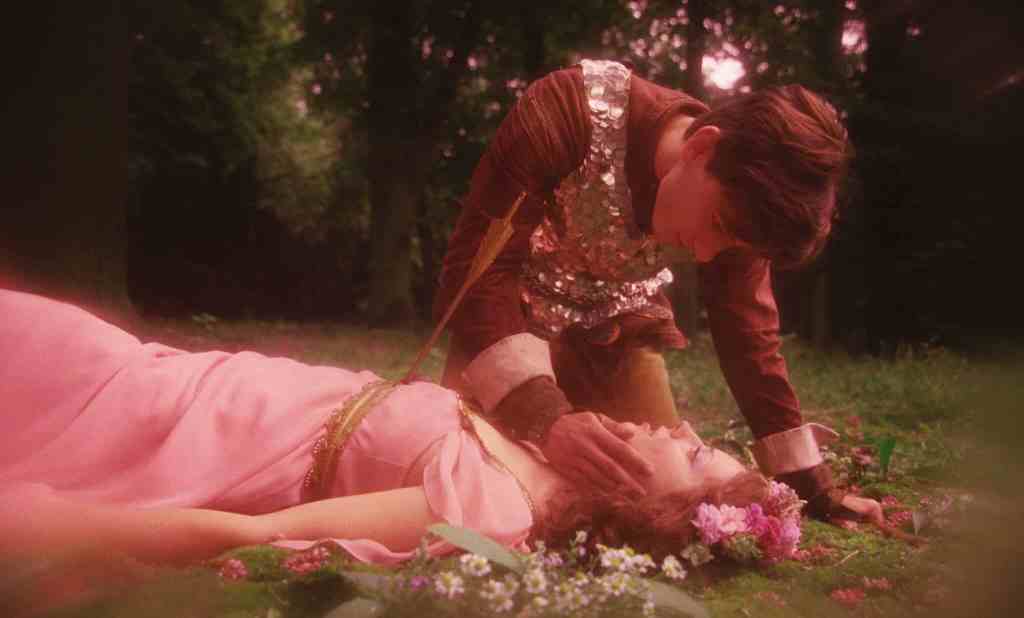
In this fairytale-gone-wrong, the fairies have been replaced by maggots and tapeworms; rotting fathers and projectile vomit; cleavers, pincers and needles. Talking to Pamela Jahn for Cineville, the director explained that the project came to her in a dream, as the pastoral image of Elvira galloping away with the prince. She was wearing a glass slipper steeped in blood. Though the film includes no such scene per se, it’s traversed by a similar tonal discordance between the romantic and the grotesque. When we first meet Elvira, she’s ecstatically scouring a battered copy of Julian’s trite verses, her big blue eyes all adoration and yearning. The scene then cuts to a vivid vision that sees her and the prince embrace in the woods. Blichfeldt forbids us to interpret this episode as anything but Elvira’s fabrication: its brief bucolic bliss is set to an upbeat synth soundtrack and bathed in a gorgeous, rose-tinted light that softens the stepsister’s dull features into cherubic grace. Such fantastical interludes abound in the film, and their pastel hues and lush greenery come to interrupt the narrative pulse like welcome painkillers.
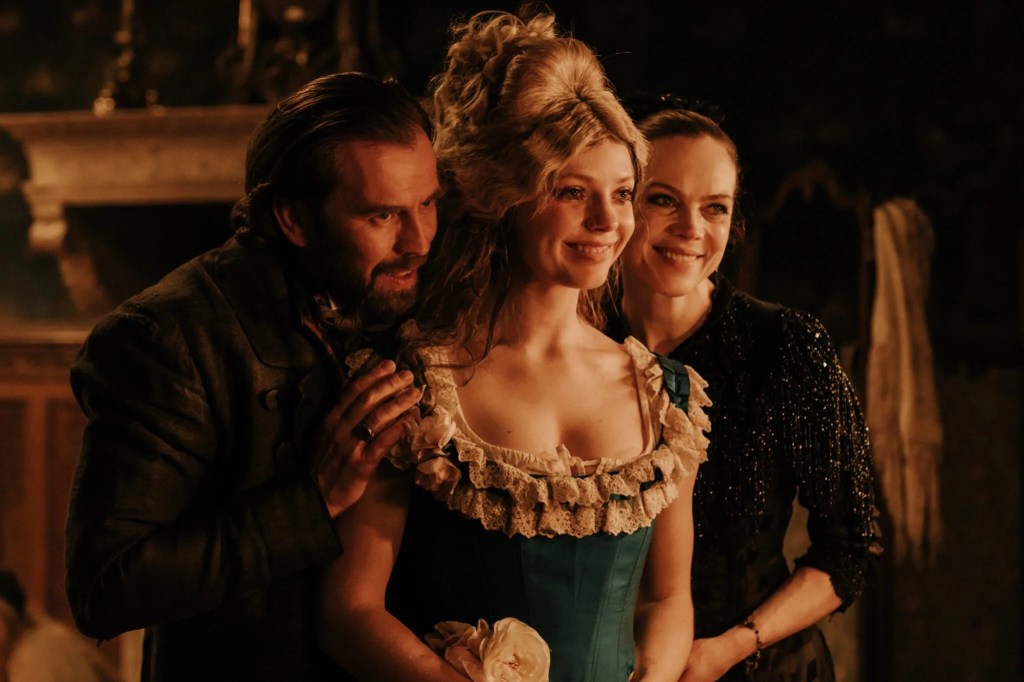
For the truth is that Elvira’s reality is an ocean of pain. To improve her daughter’s marriage prospects, Rebekka subjects her to a series of torturous body modification procedures, from rhinoplasty to eyelash extension. It’s only a matter of time until Elvira crumbles under the weight of the impossible beauty standards that her mother and the rest of their Victorian-like world have set for her. The denouement is brutal, and the film’s many scenes of visceral horror and self-inflicted bodily pain are both an explicit reference to the Grimm brothers’ version of Cinderella and Blichfeldt’s pledge of allegiance to feminist body horror. Like other entries in this genre, most recently Coralie Fargeat’s The Substance (2024) and Saule Bliuvaite’s Toxic (2024), The Ugly Stepsister understands what fairytales don’t: that to be or to become a beautiful woman won’t spare you the tragedy of being a woman—at times, it might even extend it.

Leave a comment