No sooner had we come up with the plan to compile a summer watchlist than we were confronted with two crucial questions: what makes a good summer film? And, more dauntingly still: what is it about the summertime that makes it so compelling to think about? Can the season be broken down into certain set qualities? Or does it more resemble a feeling, something that you can’t really put a finger on and quantify but sense keenly, like sea salt on your skin? Ahead of the year’s hottest month, we quizzed 12 contributors for their favorite summer movies, hoping to zero in on those ingredients that are must-have for a good summer watch. Spanning three continents and eight decades, the watchlist does not purport to be exhaustive, but to lay out a springboard to something greater: an all-out celebration of this most rebellious and transformative of seasons. From gorgeous vistas of the Pacific to the sizzling hot cement of a New York City summer, the following picks open onto a rich tapestry of images, as revealing as it is eclectic, and come to confirm our hunch that summer is, first and foremost, a state of mind, in turns agitated and tranquil. To be sure, there are some recurrent motifs here: the sea offers a photogenic backdrop to most of these entries, while the plot often rests on tried-and-true formulas that have by now become synonymous with the season — think road trips, family vacations, brief love affairs and final farewells. Yet even within the fixed limits of its iconography, the summer film leaves ample room for experimentation. It can be made to stretch over a single night, a weekend, or even a full month. It has the same atmospheric force in the Mediterranean as it does in the metropole. It can be life-affirming musical or spine-chilling thriller. In short: it can be made into anything and everything, and yet it will always loop back to that quintessential feeling of being in-between — spring and fall, love and loss, life and death. Read on for our curated selection and comment your own summer film picks below.
Panagiota Stoltidou
Summer with Monika (1953), dir. Ingmar Bergman
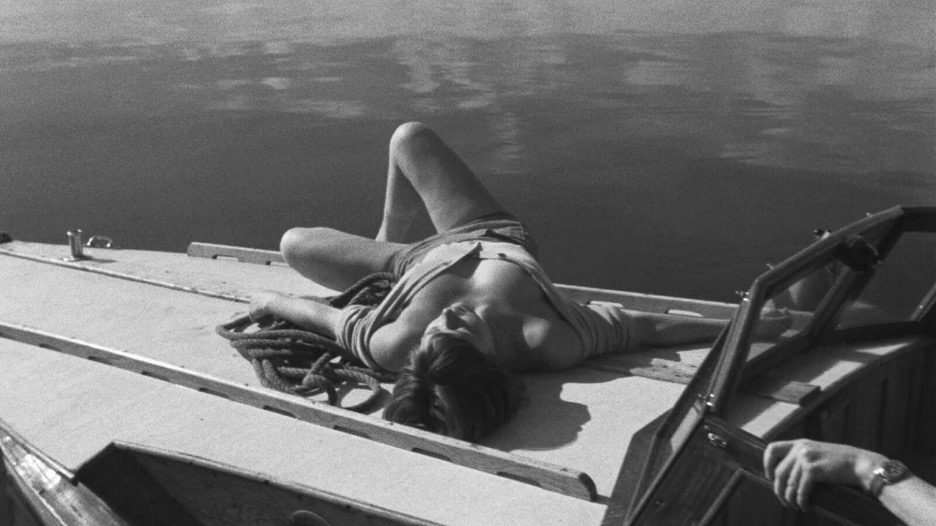
Despite a wide-reaching and controversial reception upon its initial release due to an unconventionally explicit depiction of nudity, the 1953 Summer with Monika does no longer rank among the Swedish auteur’s best-known features. This, however, does not make it any less of a must-watch for any admirer of his cinema. In its first thirty minutes, the picture dupes the viewer into suspecting that it might be an outlier in the director’s long career, starting as it does as a playful romance between two working-class young adults. This impression, justified to a certain degree by the movie’s light-hearted title and Harriet Andersson’s compelling acting as the seductive Monika, is incrementally shattered as the actual summer unfolds and Bergman’s solemn weltanschauung comes to the fore. In a twist immaculate enough to go unnoticed by an inattentive viewer, the director transforms a quintessentially idyllic depiction of summer into its very opposite — an anti-Summer, wherein reality strikes indiscriminately.
The story is simple: excruciated by their already cumbersome working lives and the many predicaments of their troubled family homes, Harry (Lars Ekborg) and Monika fall madly in love and decide to rebel. They take the boat owned by Harry’s father and spend the summer months in the fjords, contemptuous of those who go to work. Monika insists that she will not return to Stockholm. Nevertheless, the sheer corporeality of human existence soon impels her and Harry to seek some food other than mushrooms, and a shelter other than their tiny boat. On the verge of being convinced by her lover to return to urban mundanity, Monika sighs, realizing how they haven’t been to the movies since Dream Girl, right before their departure to the fjords. Harry embraces her and says gently: “No, we’ve been in a dream of our own” — stopping short of adding: now’s the time to wake up.
And they do wake up indeed. The summer —their rebellious time-out— ends soon enough, heedless of Monika’s mental refusal to return. The season reveals itself for what it’s always been: a spatial and temporal interlude which concludes upon their return to Stockholm. The last part of their story transpires as a parent’s warning against the temptations of impulsivity and naivety. Monika and Harry’s love crumbles, as she refuses to be content with their working-class destitution. She remains conspicuously childish, while Harry grows. As viewers, we empathize with Monika via the heart and feel for Harry via the mind.
The film ends in the same space where it had begun, and Bergman tempts us to cynically believe that the summer was never there to begin with. Its illusion lay not so much in its ephemerality, as it did in the fact that Stockholm was lurking in the corner of every frame. All throughout, the pristine symbolism of the couple’s rebellious summer was stained by the unceasing presence of the anti-summer.
Babak Sadaghian
The Young Girls of Rochefort (1967), dir. Jacques Demy

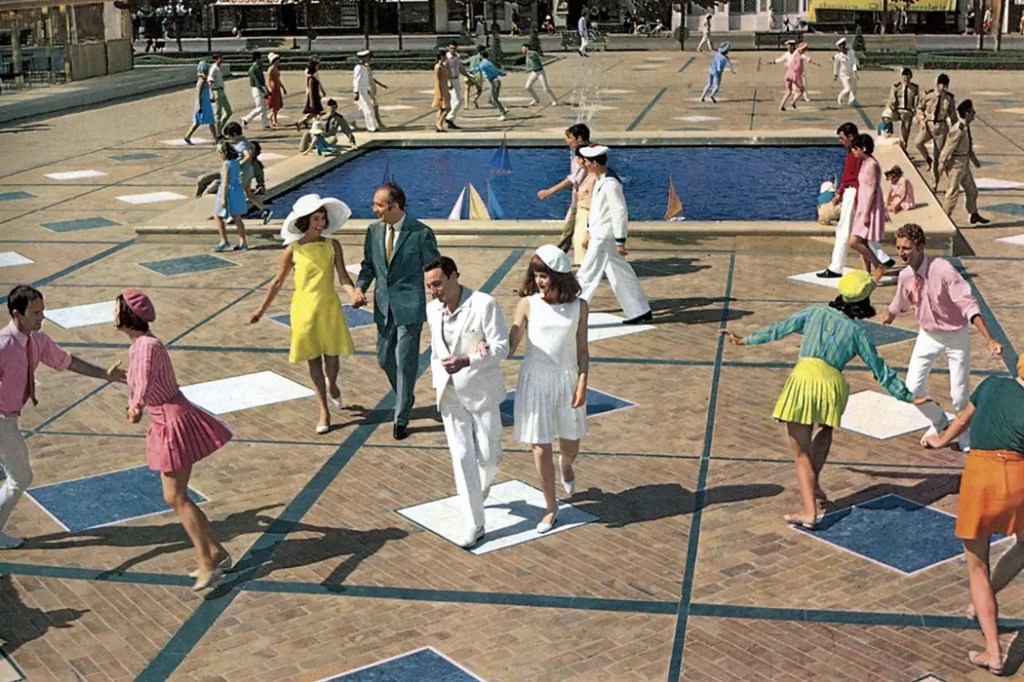
Summer is the master of fate in Demy’s celebrated musical, a technicolor fantasia where characters walk — or often dance — the tightrope between the tragedy of existence and the comedy of joy to the beat of Michel Legrand’s sublime score. The film sets off on a sunny Friday morning in the seaside town of Rochefort, as a troupe of salespeople arrive by ferry, bringing along their boats, bicycles, and horses ahead of a summer fair that is to take place on Sunday. No sooner has the band reached the main square to set up their stands and stages than we are flung into an aesthetic pandemonium of song and dance. Setting the tone for the ensuing two hours, this opening sequence both suggests and subverts the conventions of the classic musical. From the exuberant theatrics and vibrant colors to the bright smiles and flying hats, there is no shortage of staple ingredients in this French genre spinoff, yet these are mixed into fresh choreographies that trade Hollywood’s signature synchronicity of movement and near-obsessive visual symmetries for subtle moments of choreographic mismatch, as when two dancers’ legs or hands are bent in slightly different degrees, their bodies thrown in opposite directions. Such rebellious detours into erratic dancing are pitch-perfect notes in this multilayered story of love and longing, where so much seems to come down to pure chance or accident, and where individual arcs rely as much on meticulous design as they do on loose threads and rough edges. In the streets of Rochefort, plans change as spontaneously as they were made, and destiny, like impromptu dancing, twists into unexpected shapes.
Yet these summer festivities aren’t just fertile ground for renewal and change; they’re fleeting, too, like the season. None feel this fleetingness more urgently than ballet teacher Delphine (Catherine Deneuve) and composer Solange (Françoise Dorléac), twin sisters with matching outfits who are desperate to make career breakthroughs and find the men of their dreams. They see the fair as a last chance to escape Rochefort and try their luck in the big city, unaware that what or who they’re looking for might be right across the street. When festival organizers Etienne (George Chakiris) and Bill (Grover Dale) offer them a ride to Paris in exchange for a dance performance at the fair, the girls throw themselves at the task with great zeal; they need only wait out this weekend and then it’s off to their dream life in the capital. Yet one weekend is a very, very long time in the summer, made even longer by the misunderstandings and chance encounters that the script concocts. By the end of it, neither sister’s where she thought she’d be. The Young Girls of Rochefort thrives on this electric friction between reality and fantasy, mundane fact and romantic possibility. Demy drenches his frames in stark sunlight and bleached hues, making it impossible to view the open-ended potentiality of his plot as separate from the open-aired pleasures of summer.
Panagiota Stoltidou
American Graffiti (1973), dir. George Lucas

What makes a good summer film? Is it the sun, like in Jacques Deray’s La Piscine (1969)? Is it the ocean or the beach, as in Rene Clement’s Purple Noon (1960)? Is it the lust and romance that traverses Mike Nichols’ The Graduate (1967)? Yes, all of this may well be essential to a good summer film. For me, though, there stands out another, even more essential feature: a certain uncertainty that combines both enthusiasm and apathy.
It was with such an uncertain feeling that I first watched George Lucas’ American Graffiti as a teen on an endlessly warm, electric blue and vibrating summer night. The fairly straightforward plot seemed to be on a par with my giddy, lethargic and sweaty constitution: set in 1962 between neon-lit diners, the film follows a group of high school grads on one long summer night, as they do little more than aimlessly cruise their hometown of Modesto, California.
Yet American Graffiti is more than just a feel-good summer watch, I soon realized: it’s the last night before college, the final farewell between long-time friends. It’s also the summer before JFK went to Dallas and Martin Luther King stepped up to the microphone in Washington. There’s no way Lucas chose 1962 at random: a Modesto native himself, he’d also turned 18 that same summer.
You know, it doesn’t make sense to leave home to look for home, to give up a life to find a new life, to say goodbye to friends you love just to find new friends.
You can feel the nostalgia at every traffic light, in every new hit that DJ legend Wolfman Jack throws into the cars of the young, restless and insecure. But this is by no means a blind nostalgia, it’s a timeless one. And it becomes all the more powerful when you think of the disillusioned and bewildered America of 1973, the film’s release year.
Driven by a trailblazing soundtrack, American Graffiti blows the cover off illusions of teenage freedom by putting one single question into the mouths of its nocturnal protagonists: what now? Though we don’t get to see the ocean or even the sun for most of the film – Lucas seems to have left us a bit of romance, at least – this is still peak summer cinema.
It’s the dashing cars, the kind-hearted characters, the anticipating closing and the impending loss of innocence, equal parts private and shared, that make American Graffiti such a valuable watch – especially during a long, enchanted, auspicious summer night.
Lennard Olaf Göttner
Celine and Julie Go Boating (1974), dir. Jacques Rivette

Is there anything that screams summertime more than getting into all sorts of adventures and misadventures with your friends just for the hell of it? Or because of a dire need to escape the everyday? Or simply because you can spare the time? I don’t think so. Coming in like a breath of fresh air in the desperate heat of an urban summer evening, Celine and Julie Go Boating does not take place in the summer but is a perfect summer watch nonetheless. Taking place outside of time and space but staying very much inside the map of Paris, this 1974 film by Jacques Rivette is a must-watch for those who wish to romanticize a summer spent in the city. It all starts with an accidental meeting between Julie (Dominique Labourier), a head-in-the-clouds but reserved librarian, and Celine (Juliet Berto), an adventurous actress trying her hand at magic. Celine and Julie’s friendship chemistry is undoubtable, and the two soon move in together. From swapping places and living out each other’s daily routines to performing magic and outrageous stunts, the girls raise all kinds of havoc in their lives, and those of the people around them. The narrative keeps acting out too, like some sort of choose-your-own-adventure game, a lucid dream, or a psychedelic trip.
The way Rivette, Labourier, Berto, and screenwriter Eduardo de Greagorio cocreate the script and toy with the concept of time is beyond brilliant. For the duration of the movie, time shrinks, expands, and also stops completely. There is enough space to establish the most peculiar routines between the girls, wherein the only imperative is to enjoy whatever life throws at them, as well as each other’s company. Part film, part teenage girl bucket list, Celine and Julie Go Boating captures the whimsy and joy of summer days at a younger, more tender age, and I can’t help coming back to the story every summer.
Angeliki Dekavala
Jaws (1975), dir. Steven Spielberg
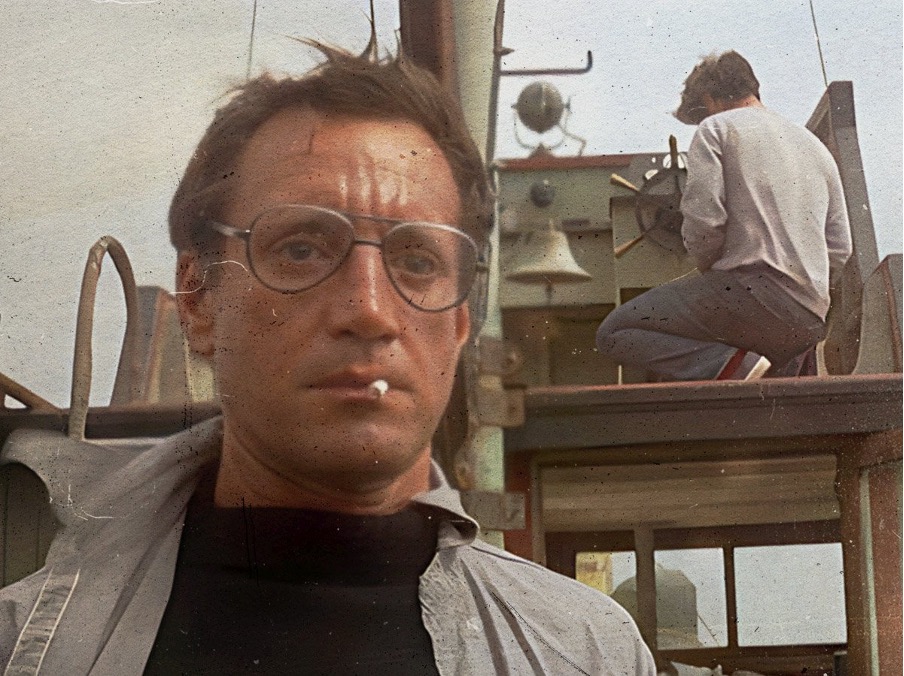
My father once told us the story of the first time he saw Jaws. He was 12 years old, one of seven siblings, and his father had given them two options to start their summer vacation: they could either spend the first day at the beach or go see Jaws and hit the beach later.
The movie looked a bit scary, but since my father had barely been to a theater before, he and his siblings eagerly chose to see it first. That turned out to be a misguided choice, of course, as none of them would go into the ocean the day after.
Steven Spielberg’s Jaws turned 50 in June of this year. It’s a cultural staple, often credited with creating the modern summer blockbuster and, effectively, changing the movie industry forever. But beyond its historical impact and the fact that Spielberg was only 27 (!) at the time of its production, Jaws remains the quintessential summer adventure movie for the way it blends intense thrills with the laid-back charm of island living.
Set in the fictional beach town of Amity Island, Jaws taps into a universal summer experience: seaside vacations, beach outings, and the ocean’s alluring dangers. This familiarity is what makes the horror so effective. The shark isn’t just a monster, it’s a threat that disrupts summer fun. Spielberg took a simple premise — a man-eating shark terrorizing a beach town — and turned it into a gripping, suspenseful narrative that unfolds with tension and purpose. The terror is amplified by the contrast: sunny beaches, kids playing in the sea, and then — the sudden attack.
Beyond the scares, Jaws is just fun. The movie never takes itself too seriously and makes space for fun banter between the three unlikely heroes, sweet father-and-son moments and reaction shots worthy of a comedy classic. Despite it being a horror film, the movie never feels like a haunted house; it feels like a rollercoaster.
Jaws is full of images of summer: sunny sidewalks, people carrying towels and buckets to build sandcastles. The beaches are full, the energy is carefree. The very first scene is a nighttime beach bonfire party. Watching it today still feels like a rite of summer, calling up both nostalgia and primal fear in equal measure.
In the decades since its release, no other summer movie has captured the same mix of terror, wonder, and sheer entertainment. It’s hard to find a better summer block-buster than the one that kicked it all off. For all these reasons, Jaws is — and will always be — my favorite summer movie.
Esteban Vega
Do The Right Thing (1989), dir. Spike Lee

Do The Right Thing is a complex, raw exploration of the racial climate in New York City, swiftly dissected in the microcosm of just one street in just one day–the hottest day of the summer. Just like a pot of boiling water that has been disregarded, heat mirrors the tensions on screen. The film examines the complex racial dynamics of a predominantly Black neighborhood from three contrasting perspectives: that of older residents, that of an energized younger generation, and that of a white Italian-American family whose pizzeria has served the neighborhood for 25 years, but who reside elsewhere. After a dispute over the absence of Black artists on the pizzeria’s wall escalates into a fight, police intervene and kill Radio Raheem (Bill Nunn), a young Black resident. The tragedy sparks an uprising that ultimately leads to the destruction of the pizzeria and alters the face of the neighborhood forever. Lee’s genius is palpable everywhere, from the script and the camera work to the music choices and the close-up and panning shots that create a proximity to the characters’ POV, showing the irony of their mutual prejudices. Yet the director’s genius is nowhere more palpable, perhaps, than in the sheer, unfiltered energy that he’s generating at every corner of the frame; this brings us closer to the different, colliding ways in which his ensemble of people navigate the neighborhood, and has by now become one of Lee’s signature choreographies in his filmmaking.
Do The Right Thing shows how racial prejudices and dynamics must not be ignored. When the film first screened in Cannes in 1989, some critics–mostly white–complained that it promoted violence; by that they meant destruction of property, of course, not the death of a Black man, showing full disregard for Lee’s true message. Then, as now, the film is a powerful masterpiece, integral and unforgettable. Its purpose is to spark dialogue, the opening line of the film being a message directed explicitly at the audience: “Wake up. Wake up. Wake up. Wake up.”
Thirty-six years later, that wake up call still resonates both inside and outside the screen, as Bedford-Stuyvesant–the neighborhood depicted in the film–has drastically changed due to growing gentrification in Brooklyn in the last decade alone. Earlier this summer, on a hot and humid July morning, I was roaming around Fort Greene Park and bumped into a mural of the film, in an almost serendipitous manner. The scene was rendered even more fateful once I looked away from the mural and into the street: to my left was standing Spike Lee himself, in the flesh, effortlessly cool and typing up a text. In five years of living in New York, I’d never approached a celebrity, but I broke my rule and said hello. After he asked my name and where I was from, we shook hands. All I could say was “no one does it like you sir, no one.” He nodded and we both carried on with our day.
And no one does it like him, really. No depiction of a summer day in another movie can shake viewers to the core like Do The Right Thing. It is simply one of the best films ever made. Do yourself a favor this summer and watch Lee’s magnus opus if you want to find some refuge from the heat.
Camilla Marchese Gonzalez
A Summer’s Tale (1996), dir. Éric Rohmer

Water. Waves. Seagulls. Wind.
It is Monday, July 17th. A ship approaches the coast of Brittany near Dinard. On board is a dark-haired, lanky young man. He is carrying a hiking backpack and a guitar. He’s alone. The sun is shining, the light is warm and soft. For the first ten minutes of Éric Rohmer’s late work A Summer’s Tale (Conte d’été), no one says a word. It’s just images, sounds, smells, textures, feelings. The young man spends his days wandering and playing the guitar whenever he has a moment to himself. He settles in and arrives. And so do we.
The film follows Gaspard (Melvil Poupaud), a maths graduate who still has a few weeks left before his new job starts and has arranged to meet his girlfriend Léna (Aurélia Nolin) in Dinard. She doesn’t turn up at first, and by chance Gaspard meets ethnology student Margot (Amanda Langlet) in a crêperie. They talk and walk a lot, understanding each other truly well. They really listen to each other. Later, at a party, he meets the sensual Solène (Gwenaëlle Simon), with whom he begins to flirt. When Léna turns up in Dinard after all, Gaspard finds himself lost in a search for identity, juggling dates and promises between the three women.
At the heart of it all is sehnsucht — that German concept that comes closest to capturing the intensity of yearning. With Margot, it’s the longing for familiarity and intellectual connection. Solène represents a desire for passion and devotion. Léna, in turn, symbolizes the unattainable. An illusion. “Perfect love.” Gaspard feels these longings without knowing what he’s actually searching for. Is he searching at all? What for? A relationship? A friendship? Closeness? Freedom? This search doesn’t make him weak, but real. It’s often that not-knowing that is the truth. The summer offers the ideal backdrop for it all: the sun, the sea, the warmth. The days stretch out endlessly. You have the possibility to reinvent yourself, or not at all.
Rohmer manages to portray the characters with great authenticity and closeness. It feels as though you could experience it all yourself. Conversations unfold with incredible ease. As a viewer, you have enough time to observe the characters closely, to analyze their behavior, to absorb their facial expressions and gestures. A Summer’s Tale tells of the small, ordinary, and difficult things: of indecision, desire, closeness, and friendship. Of that early stage of getting to know someone when everything is new, like at a holiday destination. Nothing is final, nothing is certain. And yet, everything is meaningful.
When I watch A Summer’s Tale, I feel like I’m in love myself — with the sensations, with Margot, with Solène, with Léna. With Gaspard too. With the warm images, and with the lightness that resonates in every word.
This film is like a feeling, and this feeling is like a song.
This film is summer, and summer is sehnsucht.
Johannes Rüsike
La Ciénaga (2001), dir. Lucrecia Martel
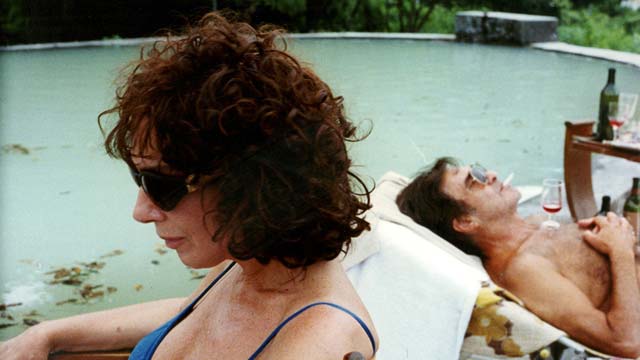
Muted colors. Various alcoholic beverages in elegant glasses. People pour drinks for each other, sip them up, drag loungers across the floor. We only see fragments of bodies in swimsuits – sluggish and sweaty. Ice cubes tremble and clink in their glasses, while a distant thunderstorm rumbles in the background. But the tension of the looming storm never breaks. This is a film for oppressively hot, humid days.
In Lucrecia Martel’s feature debut – the title is Spanish for “swamp” – we follow two bourgeois Argentine families over the course of a summer as they slowly fall into decay. The swamp is not just the surrounding landscape or the stale, dirty pool, it’s a state of being: intoxication, boredom, speechlessness. Life stands still.
The film’s fragmentary editing offers no clear linear narrative, and even the characters themselves blur together. What at first appear to be two separate families soon melt into an undefined mass. The kids’ ages are hard to define; the boundaries between generations, and those between parents and children, dissolve. The teenagers are left to navigate life on their own, while the adults – usually drinking in bed or by the pool – are emotionally absent.
The foul pool, where the adults lounge in lethargy, becomes the film’s central symbol of stagnation. In one scene the teenage Momi jumps into the murky, almost viscous water. This is thick with leaves and decay. It’s a moment of shock, but one that goes unanswered. Even when characters are injured – or when the children shoot a cow in the swamp – no one seems to care. Illness, neglect, and domestic violence simmer just beneath the surface, are never spoken aloud. Racism, too, lingers in the background: the Indigenous maid remains locked in a rigid, unquestioned social hierarchy.
Martel holds us tightly in her film’s atmosphere and sensory world: barking dogs, a blaring TV, the whir of the fan, distant gunshots from nearby hunters. The phone rings endlessly, but no one answers. The villa’s claustrophobic interiors, overlapping shrill sounds, constant napping, and sweltering heat all build a tension that feels on the verge of eruption; yet nothing ever truly breaks.
This is not the kind of summer film that offers an escape. Instead, it’s one that pulls you deep into the heat, the sweat, and the slow collapse of it all.
Annabel Sewerin
Y tu mamá también (2001), dir. Alfonso Cuarón

More than a summer watch in the obvious sense, Y tu mamá también is a film that stands in for the many fantasies of summer: innocence and passion, a last-minute road trip, the discovery of an unspoiled beach in paradise, desire unbridled, transgressive lust, the joyous language of friendship and the urge to enjoy life as if one were expecting its premature ending. Being alive and submitting oneself to the fullness of experience.
Over 20 years after its original release, Alfonso Cuarón’s film withstands the test of time and remains gorgeous, funny, tender and full of all kinds of passions. Like all good movies, it lends itself for a rewatch: the memorable continues to be memorable, while something new unveils itself each time. People I know claim to rewatch Y tu mamá también every year, or to show it to each person they start dating (with what purpose, I wonder). Upon rewatching the film recently, I was struck by the chemistry between Julio (Gael García Bernal) and Tenoch (Diego Luna). The two actors’ fruitful collaboration in Mexican and international projects over the years makes this early and hilarious display of their friendship on screen appear even more sincere and powerful. Yet it is Luisa, stunningly played by Maribel Verdú, who remains the undisputed protagonist: a tragic and troublesome figure that appears to have all control while not having any at all. As anyone who has seen the film will know, the ending resignifies the entire plot. During my second viewing, I recognized the underlying impulse that drives the plot forward at each stage of the journey, and was amazed at how masterfully it is hidden in plain sight.
All true delight comes at the price of it having an end. We can only get a sense of greatness by the fact that it eventually recedes, like the ocean and its surf. Y tu mamá también is not only a celebration of life, but a poignant reminder of its transience. It reminds us that all things must come to pass; the summer too. And that is perhaps why we should always give in to its warm beckoning.
Alonso Burgos
Sommer vorm Balkon (2006), dir. Andreas Dresen

In Germany, there’s a well-known place close to the nation’s heart: Balkonien.
It’s meant to be a joke — “We’re not going anywhere this summer, we’re spending our vacation on the balcony. Balkonien, haha.”— but really, it’s kind of sad. No summer trip, no change of scenery, no leaving the house at all? It’s unthinkable.
And yet, that’s the reality for many people, including Nike (Nadja Uhl) and Katrin (Inka Friedrich) of Sommer vorm Balkon, a film best watched on a warm summer night when your flat feels too hot to sleep in and the air isn’t moving.
Directed by Andreas Dresen in 2006 — the same year Germany hosted the FIFA World Cup — the film follows two friends in their late thirties who spend the season on their balcony, in Berlin’s Prenzlauer Berg neighborhood.
Nike and Katrin aren’t just frustrated with men; they’re struggling with life itself. Instead of swimming in the lake, they’re swimming in circles. And instead of checking into an all-inclusive resort, it’s off to rehab.
This could easily tip into full-on cheesy territory, especially considering the never-ending troubles with men. But it doesn’t.
Even though the characters never get to see a pool, let alone the sea, Dresen’s film manages to conjure a very particular kind of summer feeling.
That’s the real magic of Sommer vorm Balkon: in the chaos of everyday Berlin life, summer isn’t always visible — but you can feel it, especially in how people stumble through things together. And no matter how hopeless things seem for a single mother and a geriatric nurse: in summer, it never really gets dark. It’s already getting light again.
That’s exactly what I want from a summer film: a bit of light, a bit of hope. And maybe a cold drink or two out on Balkonien.
Max Schulte
Call Me by Your Name (2017), dir. Luca Guadagnino

A summer watchlist wouldn’t be complete without Call Me by Your Name, Luca Guadagnino’s adaptation of Andre Aciman’s eponymous novel. A sun-soaked ode to the summer season set in 1983 northern Italy, the film follows the slow-burning romance between 17-year-old Elio (Timothee Chalamet) and Oliver (Armie Hammer), a 24-year-old doctoral student who’s staying with Elio’s family for the summer.
Shimmering heat, bicycle rides drenched in sunlight, afternoon swims in the river, late nights out dancing, coincidental meetings — everything in Call Me by Your Name radiates summer. The season is not a mere backdrop, but a protagonist in its own right, with Elio and Oliver’s tender love unfolding in the very heart of it. Like summer, this love is fleeting — impossible to hold onto. It glows for a few weeks, then slips away, never to return. Guadagnino captures each summer day with great intimacy, keenly portraying the freedom that comes with that time of the year, when some days stretch endlessly and others vanish in a moment.
But the film is more than a beautifully rendered summer reverie. At its core lies a dilemma, originally posed in a story read aloud by Elio’s mother (Amira Casar): Is it better to speak or to die? This question becomes a central motif in Elio’s summer, as Elio chooses to risk vulnerability and pain for the sake of honesty. Better to speak, says the princess in the Heptameron story. Her answer echoes in the film: speaking, even if it hurts, is liberating, and the love resulting from it redemptive.
Call Me by Your Name became a summer ritual for me: I revisit it every June in Berlin’s Freiluftkino Kreuzberg, noticing new details with each annual rewatch. A heartracing and heartbreaking film, Luca Guadagnino’s summer classic is not flawless but its imperfections make it all the more sincere. It leaves an achingly bittersweet feeling — but as the emblematic figure of Elio’s dad (Michael Stuhlbarg) says:
Right now, you may not want to feel anything. Maybe you’ll never want to feel anything. And, maybe it’s not to me you want to speak about these things, but, feel something you obviously did.
Iliana Tsachpini
Été 96 (2023), dir. Mathilde Bédouet

Is there one moment when you felt your life shifting? When you crossed the invisible line between childhood and adolescence? Maybe a specific day or event that made you realize you’re not a kid anymore? Most of us have one such moment. And so does Paul, whose life’s turning point comes during the summer of 1996.
Été 96 is a beautifully crafted short animation by Mathilde Bédouet that captures the exact moment when protagonist Paul feels himself stepping out of childhood and into something more uncertain, more adult. In just thirteen minutes, the César-winning short evokes a warm sense of nostalgia, both visually and emotionally. Its animation style — soft, textured, and reminiscent of crayon drawings — mirrors the fragility and haze of memory, making the film feel like a page pulled from a childhood painting.
The story unfolds on August 15th, Assumption Day, a national holiday in France. Paul’s family and some friends head out for a picnic on a small island. Though the event is a yearly tradition, the group lets one essential detail slip their minds this time: the tide. As the water rises, they find themselves stranded overnight. While the adults scramble to adapt, Paul drifts into his own quiet transformation.
Surrounded by nature, uncertainty, and the muffled sounds of the adult world, Paul begins to feel the distance between who he was and who he’s becoming. He’s no longer a child, but not quite an adult either. It’s an in-between feeling, full of confusion and quiet reflection, something most of us can relate to.
Été 96 gently lingers with you, like the sun on your skin after a sunny day at the beach.
Valeria Krel


Leave a comment