With their lyrical tale of queer love in the mountains, Stergios Dinopoulos and Krysianna B. Papadakis dare to imagine rural Greece as a place bursting with life, humor, and its fair share of folklore charm.
An interview by Panagiota Stoltidou
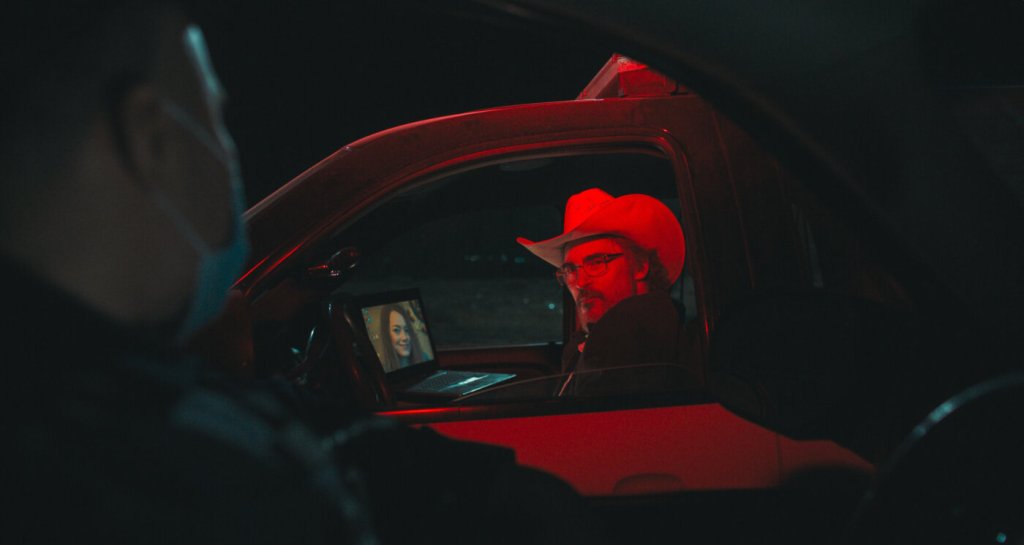
“It’s Greek stories that move us.” I meet Stergios Dinopoulos for a coffee prior to the awards ceremony of the 66th Thessaloniki International Film Festival. I’ve arrived early to go over some notes and don’t notice him approaching until he’s standing right next to me, stealing glances at my laptop screen. We fill each other in on last night’s party hopping and prepare for the obligatory shift from Greek to English. This turns out to be surprisingly smooth. An Athens native with a bachelor’s degree from the Art, Film and Visual Studies program at Harvard University, Dinopoulos is an expert code switcher with a deep love and curiosity for the American filmmaking tradition. Yet with Bearcave (2025), his debut feature that he co-directed and co-wrote with fellow Harvard graduate and close friend Krysianna B. Papadakis, he wanted to make something palpably Greek. Based on the directing duo’s short of the same name, which won them the Golden Dionysus award at the 46th Drama International Short Film Festival back in 2023, the film marks a back-to-the-roots moment for Dinopoulos in more ways than one: it was shot in the village of Tirna, where he spent the summers of his childhood, and where his grandmother still resides to this day. It was also co-funded by Greece’s Pame Ligo Collective, Dinopoulos’s own project that he set up with Papadakis, cinematographer Arsinoi Pilou and producer Thanasis Michalopoulos as a more horizontal alternative to the Greek industry’s competitive production model. Set amidst the towering mountain peaks and lush forests of northern Greece, the film follows no-nonsense farmer Argiro (Chara Kyriazi) and it-girl manicurist Anneta (Pamela Oikonomaki), childhood best friends who are secretly in love with each other. When Anneta announces that she’s moving to the city of Larissa to live with her mother-in-law and her cop boyfriend, whose child she is expecting, Argiro suggests going on a hike to the eponymous bear cave, in a final attempt to convince her friend to stay. What ensues is a keenly felt, vividly shot character study of two people slowly coming to terms with their feelings and claiming an alternative future for themselves and for their dwelling place.
As we cross the busy port to reach the square building of the awards venue, we are startled by the heat of the November sun falling on our backs. Yet an even bigger surprise awaits Dinopoulos inside. Bearcave will go on to take the closing ceremony by storm, racking up a total of seven awards, including the Fipresci Award for Best Greek Premiere, the Hellenic Broadcasting Corporation Award, and Female Newcomer Actress for Kyriazi. This latest success ends a year-long winning streak for the film, which received the top prize in the Works in Progress section of the 65th TIFF, as well as this year’s Europa Cinemas Label award of the Giornate degli Autori program at the 82nd Venice Film Festival. It’s all much-deserved for a team that has crafted something so loving, both on and off the screen.
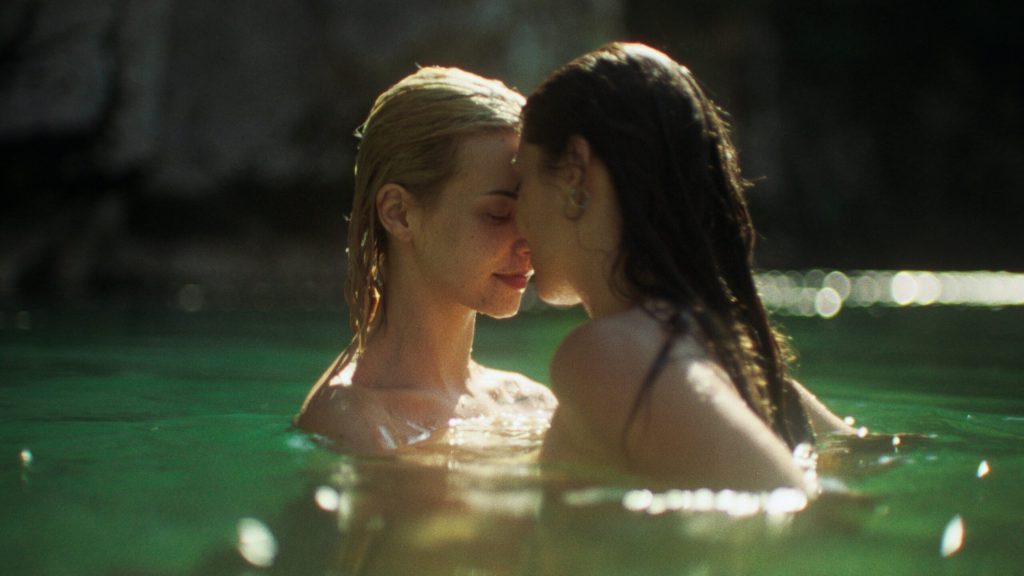
Filmpost: I was hoping we could start with Friday’s national premiere. How did it feel to have your film finally screen in Thessaloniki, a year after it won the top prize in the Works in Progress section of TIFF’s industry program?
Dinopoulos: Thessaloniki was way more stressful than Venice, it’s more intense showing work to people who love you. There’s just been so much anticipation for the movie as well, since it’s slowly been building for three years, so I think that anticipation created emotional intensity. The release was bigger here, I felt the closure, which I didn’t quite feel in Venice. I feel like this was kind of our last stop and everything is coming full circle. And there was also a lot more laughter here, I didn’t expect this much laughter. People always laugh, but sometimes, when it’s like a festival festival, they have their art faces on so they laugh but not quite. On Friday, though, what with the premiere being in Greece and there being a lot of friends and collaborators in the audience, it kind of loosened up the room in a way that was really important to us. The movie’s supposed to be funny, it’s not supposed to be a serious film, though it deals with serious things.
Filmpost: I think that seriousness is especially pronounced in the first chapter of the film, which is based on your prizewinning short. At what point in your creative process did you decide that there was a feature film to be drawn out of your shorter project? What kept pulling you back to the story of Argiro and Anneta?
Dinopoulos: Well, when we wrote it, we weren’t sure we were going to continue making it after. It all happened very quickly, Krysianna and I wrote the script for the short in a few days, and then our priority was just getting a camera and getting a little bit dirty with it, because we had missed filmmaking. It had been a few years since I had made a movie, what with the pandemic and all of that. But then we’d also written something that ended in a cliffhanger, where Argiro is by the water, and we had this additional post-credit scene that kind of teased a continuation, and I think us putting that in there was a subconscious way of telling ourselves that we wanted a little bit more, even though a lot of people thought it was maybe a bit too much to have a post-credit sequence in a 40’ short film. But not us! After we finished the short, we basically started immediately writing the feature. I remember going to Gavdos after the shoot to decompress, and I was already writing…
Filmpost: So no decompressing after all?
Dinopoulos: No decompressing [laughs] you decompress by writing more! We had also just fallen in love with the characters a lot, and we had questions about what happens next in the story, especially with Anneta. Was she a shitty friend, is that why she leaves? Or has she maybe also been through a lot? I think those questions made us start to reverse-engineer the greater story.
Filmpost: I’m curious to know how you went about translating the intimate, self-contained tone of the short within the broader, multi-perspective narrative scope of the feature.
Dinopoulos: I won’t say it was too challenging, the story kind of grew organically from the short. The short does start a little bit more internal, and then the world does open up, but that also made sense to us, over the course of a feature-length movie. The perspective shift was very important to us, going to Anneta for the second chapter was kind of a structural breakthrough. In order for her to also be a full character, we needed to see what happens with her on her last day in the village. There were gaps in the initial story, intentional ones, because we were following Argiro and her cumulative surprise of registering romantic love for her friend and then going to find her the next day and realizing she’s left. And we understood that these gaps were the exact points where Anneta had her character moments of struggle, and then you see that in the second episode. She’s kind of bending the rules too, she feels trapped, her boyfriend’s coming to pick her up and take her to Larissa, her parents are there reinforcing her relationship with this man she doesn’t want to be with, she’s dealing with a pregnancy, but then at the same time she’s sneaking out at night, because she really wants to see her friend who she’s also in love with. In a sense, Anneta kind of coming into her own was the motor for creating a feature out of the short. We had this longstanding, playful debate with Krysianna about who the protagonist in the movie really is, and in the feature it’s definitely both of them.
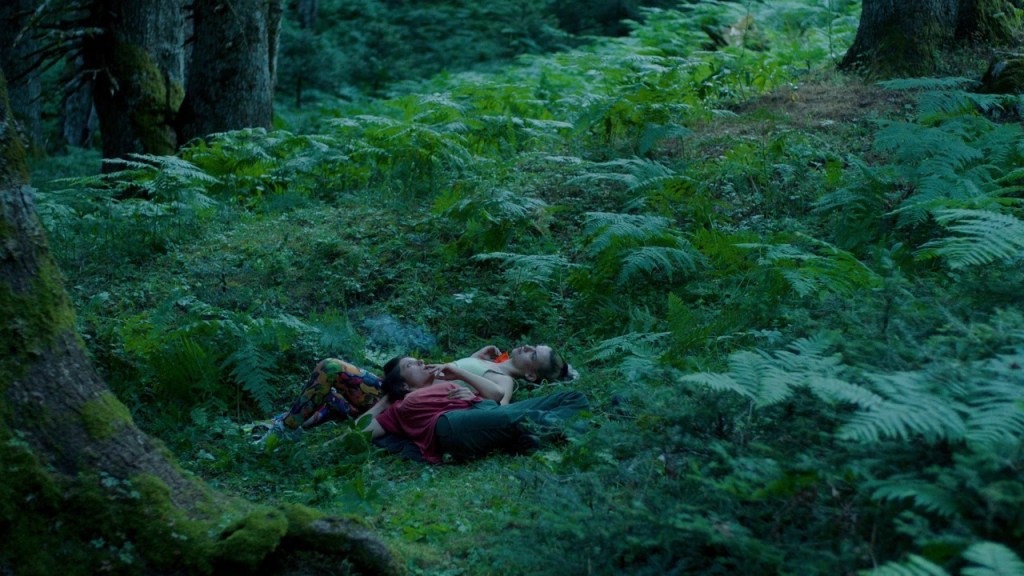
Filmpost: I found it really interesting how you never show Anneta’s infamous cop boyfriend in the film, and yet all your female characters are so lived-in and nuanced. Both Anneta and Argiro have a certain fuck-you-ness about them that is at once quite surprising and very refreshing. The film as a whole reserves a lot of optimism and humor for the people of a countryside that is otherwise often portrayed as bleak, barren, and ungiving. What in the hands of another director might have turned into a cautionary tale of suffering, loss, and persecution, you render with a lot of joy and an open, forward-facing gaze. At what point in your filmmaking process did you know that Anneta is coming back? Were you always going for a happy ending?
Dinopoulos: Maybe not explicitly, though one of the things we did know, even when we started writing, was that Anneta and Argiro would end up together. I like happy endings, or at least liberatory endings, the ending’s not always 100% happy, but there’s a sense of freedom to it, and that we were absolutely sure of. It was very important to us for this not to be an overly dramatic, tragic tale of queer love in the countryside. The decision was essential, we rarely see Greek queer stories ending well. But this begged the question of what happens next, too: what does the future look like for two people who decide to follow their love, even though all these forces are pulling them apart? We were very inspired by this idea of the radical imaginary, and how you can only change things culturally if you imagine alternative outcomes to them. A lot of my favorite films open up worlds that maybe don’t exist yet, they create possibilities. That’s the most powerful part of filmmaking for me, and we wanted to approach Bearcave in that way. If you’re just reproducing tragedy, how can people live differently?
Filmpost: That’s beautiful. I was wondering if you could maybe tie it back to the setting of your film. Bearcave definitely opens up a new and radical way of looking at the countryside. It’s not a setting we get to see often in Greek film productions and their staple diet of urban and seaside vistas. Then again, when we do get glimpses of the countryside in film, these are rather eerie, sketching the contours of a place devoid of life, or following characters who leave their villages to pursue a better future in the city. That’s not unlike Anneta’s arc, but what is so interesting in Bearcave is that she chooses to return to her village. If anything, that’s where life happens for her. In stark contrast to the time she spends at her boyfriend’s home in the city of Larissa, where she’s mostly seen splayed out on her mother-in-law’s couch watching daytime television and painting her nails, Anneta’s days in Tirna are filled with joy, adventure, and all kinds of drama. Do you see rural Greece as a viable alternative to life in the big city?
Dinopoulos: I think we’re quite bucolic in many ways [laughs] Nature was what drew us in to the project, we wanted to spend time in the mountains, so that’s part of why we chose to shoot in Tirna. But we definitely also wanted to oppose the classic narrative arc that sees characters moving from the village to the big city to free or find themselves. We wanted to pose the question of where freedom really is, to subvert the thinking that views city life as emancipatory and village life as claustrophobic. In Bearcave, it’s actually the other way around. And then there’s something else that we like in the film and that is very intentional, which is that the countryside does not come off as a backwards place where people are more conservative or non-accepting. There are complex gender dynamics that come up in the plot, for sure, but actually this idea of acceptance, at least in terms of sexuality and queerness, doesn’t come up at all in the film. Village life and queer lives are not incompatible by default. But we were also dealing with this question of the countryside and its alternative model of life outside the plot as well. It’s a question that all of us in the crew constantly had: is living in the city making us truly happy? Should we go back and live in our villages instead? In a sense it’s a very Greek question, because we all hail from the countryside one way or another, and I felt it a lot during the shoot. I’ve been basically going to Tirna every year, every summer, since I was a baby, but going back there to film, I met a lot of people I hadn’t met before, and forged different relationships and collaborations with them, which I’d never even imagined possible. There was a lot of rethinking my relationship to my village. In the film, the angle is slightly different, because it’s people who still live there and are only now thinking about leaving, or come back and are pushed and pulled relative to that.
Filmpost: In making the film, was there a discussion around Greekness in general? You’ve partly grown up abroad, you’ve both studied abroad too, then came back, so your experience of Greece has always been at least partially informed by this movement of return. Maybe I’m speaking too much out of personal experience here. But I’m wondering if you’re conscious of any possible ways in which this unique relationship to Greece that you both share has had an impact on how you chose to portray Greece and Greekness in your film.
Dinopoulos: Yes, how one interprets Greekness having lived abroad is quite interesting. I mean, Krysianna and I both grew up in Greece, we went to school here, so there’s not the pure expat perspective, we feel quite integrated. At the same time, having lived abroad for many years, having studied abroad, creates an interesting dynamic with the motherland. Coming back, we felt a deep curiosity and love for it, a deep longing for the nature and the people. But we also felt that small distance that living abroad creates, and that allows you to see some things a little more for what they are, or from a slightly different, more enthusiastic angle. When you listen to polyphonic music or Thessalian clarinets, there’s just that nerve that bites, it’s so moving, it’s so hard to describe…I think most Greek people feel this, but the experience of having lived abroad creates this extra layer of curiosity and distance that heightens the awe, and hopefully that shows in the film.
Filmpost: I find it really interesting that you mention the music. Yoursoundtrack encompasses a wide —and wild— repertoire, from the trap beats of Negros tou Moria and Marina Satti’s pop hits to traditional polyphonic songs. There’s a lot of diversity there, but you never let it play out as a battle between old and new, tradition and progress. If anything, the different songs join forces to lay out the map of a contemporary cultural landscape that thrives on these very contradictions. Throughout the film, your characters never become ciphers for a homogeneous Greekness, but instead shift effortlessly between the diverse cultural registers at their disposal. I keep on going back to this early scene of Argiro shoveling shit in her farm while listening to techno. As young filmmakers directing and producing in Greece for an international audience, how do you approach the issue of representation? Did the filming of Bearcave include any conscious discussion around the preconceived ideas that a non-Greek public would have about the youth that you portray, and around how best to cater to or subvert these expectations?
Dinopoulos: Yes, it was really important to us from the outset not to force an audience reaction. We didn’t want to be provocative for the sake of it, and we never thought of the film in terms of marketability or where it fit into the industry. We have learnt in the American storytelling tradition, which is all about character-driven drama. So even though we knew from quite early on that we wanted our film to have a Greek cultural and political aesthetics, the thrust has always been a narrative one: why are Anneta and Argiro making these decisions? How are they transforming? How do they feel at any given moment? I think when you deeply love the characters, when you’re curious about them and you structure your story around how they change and how they relate with each other, you also free them from any kind of clichéd rendering. We wanted to make a Greek movie, but more than that, we wanted to make a movie about these two people in these very specific circumstances.
Filmpost: I’d be curious to know more about your approach to building the aesthetic language of the film. From the textures and the colors to the recurrent intercuts and the vertical shots, the aesthetic decisions that drive Bearcave offer, I think, a surprising entry point into a story that otherwise has the underpinnings of a social drama.
Dinopoulos: That’s great. Give me thirty seconds to make sure no one is looking for me [pause] Okay, all good! It was very crucial for us to have a fairytale texture and quality, at least in the aesthetics. It is a story very much rooted in social issues and relationships, as you say, but it’s also a project of the imagination. We wanted to open up a new world, very much in the vein of the radical imaginary, we wanted this to feel like a bedtime story almost, that’s why there’s chapters, that’s why the colors are the way they are…So we’re shooting in an experiential way, we’re shooting in an experimental way at times, playing with time and perspective shifts. Much of the shot selection in the editing was also aimed at creating a world that is experiential and narratively fractured. The film is made up mostly of one-shots, they’re very subtle one-shots, but I think that also added to this mythological aspect.
Filmpost: What came first, though? Was it the characters or the fairytale aesthetics? Did the film start as a stubborn image or was it more of a narrative inkling?
Dinopoulos: I like “narrative inkling”, that’s a good phrase [laughs] Bravo! I mean, I always wanted to make a movie in my village, but there was never a concrete idea. Not until the pandemic, when Krysianna and her girlfriend wanted to see the Greek mountains and I brought them along to Tirna for hiking. We were already teasing writing something together and then we did the hike and we sort of immediately started having ideas. There was this image of the cave. Of a woman, standing alone in a dark cave. That’s how it oftentimes happens in movies, at least for me, you get a really strong, almost psychodynamic image that just pops into your brain, and that begs questions. How did this woman get into the cave? She went on a hike with her best friend. But why did they split up? Oh, her friend told her something that devastated her. What did she tell her? That she’s leaving the village. Wait: why did that devastate her so much? Because she’s kind of secretly in love with her. And then the plot kind of grew organically from there.
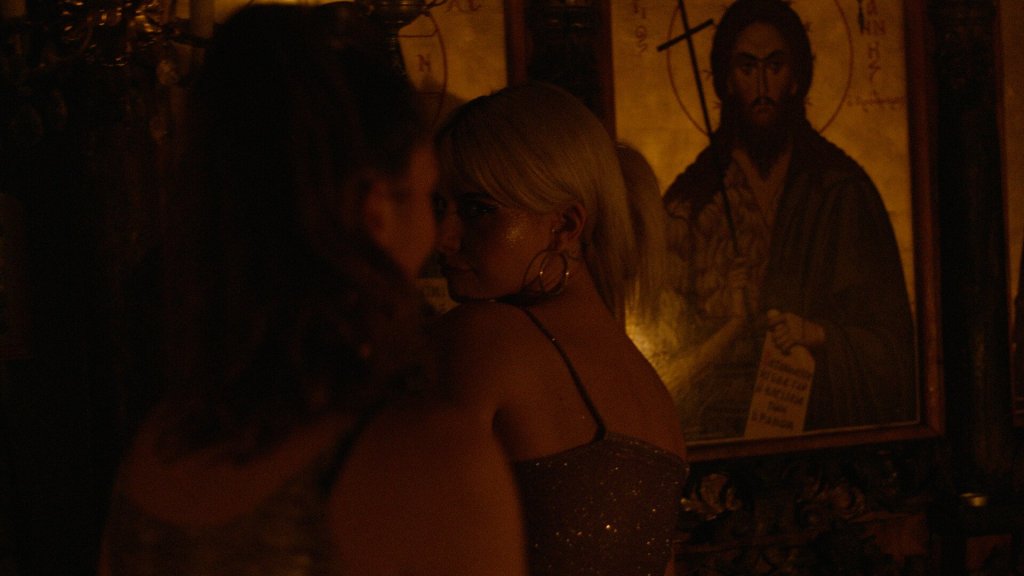
Filmpost: If we still have some time, I’d like to hear more about your creative collaboration with Krysianna. This sounds like a project that you pursued together from the very start. How was your experience balancing co-directing, co-writing and co-editing?
Dinopoulos: Yeah, there’s a lot of “co-” [laughs] with Krysianna in this film. The creative collaboration was, weirdly, very easy. We had a very similar vision from the beginning, we knew the things that were important to us. So then, we still disagreed on things, but we were also always aiming towards the same direction. Oftentimes someone would have a great idea and we would try it out but then end up throwing it away because it just didn’t serve the characters. Our focus was always the narrative, we didn’t want to be precious about individual ideas. You need to have that fluid creative process, especially when you’re co-authoring with someone. Then again, Krysianna and I shared a brain cell for so long that sometimes we would workshop stuff on our own and then meet and realize we had the same idea. That happened a lot in the editing process and it was really fun.
Filmpost: You also co-produced the film, right? The short was crowdfunded, and you made the feature with support from the Pame Ligo Collective, which you’ve founded yourself alongside other members of the filmmaking team. Could you talk a bit about the project? When we met in Drama in September you mentioned that Bearcave adopts a similar working model to the one Greg Kwedar employs in Sing Sing (2024), one built on parity and horizontal structures. How was it working in this way? Can you imagine doing that again in the future?
Dinopoulos: Yes, I’m really interested in pursuing it in the future. We worked collectively in the sense that there was no head or producer who was mandating things, there was no boss [laughs] We were just a bunch of twenty-something-year-olds, and we had to structure our work together, and do it ourselves. So that did happen a lot more horizontally, there wasn’t the clear, hierarchical chain of command that there is in a movie. Krysianna and I are also very non-controlling people, we prefer to go with the flow, to sit back and guide, and whoever has a good idea we kind of just follow it. So there’s that collectivist element and there’s also the collectivist element of going to a place to shoot and opting not to air-drop a production in, where you have all the big vans and the catering and the food. We didn’t want that at all, which is also why we rejected many offers from actual production companies. We wanted this project to be homegrown in a way, we wanted to eat from locals, we all wanted to cook and live together in my grandma’s house. It was like a commune, essentially, for a month, which might have made things difficult on an actual shoot where you’re always trying to streamline everything, but in our case, slowing some stuff down or making some things harder for ourselves actually created more on-set chemistry. It was always our project, no one felt like a hired person who must work for five, twenty days and then go home. We needed to clean the house at times, after a long day of shoot, and that actually brought us closer.
Filmpost: I have a final question for you but I don’t want to end this on a bleak note so you have to give me an optimistic answer [Dinopoulos laughs]. Prior to your film’s premiere on Friday, we watched an animated spot by Visibility Zero, which pointed out the lack of institutional support for Greek film professionals. According to the ad, the per capita expenditure for the audiovisual sector is 63 cents a head—roughly the cost of a bottle of water and a piece of candy. In light of this bleak statistic, your decision to leave the U.S. and make Bearcave in Greece, with a Greek cast and crew, inevitably acquires a somewhat political dimension, in my eyes at least. I imagine there was a fair share of existential and practical questioning involved in it, and yet you still came back. Was the film a means of committing to living and working here? To put it in more provocative terms: can you continue making movies in a country where your craft is valued no more than of a bottle of water and a piece of candy?
Dinopoulos: Mm. I mean, the answer is yes! You’re going to get an optimistic answer because I’m an optimistic person [laughs] There’s a reason why Krysianna and I both came back and are choosing to do films in Athens and in our villages and not in New York or LA, even though we’ve lived and worked in these places too. First of all, it’s Greek stories that move us. Questions about identity and culture, the politics in Greece, really animate us. There is so much potential in Greece for amazing cinema, there’s thousands of amazing creatives, you see them really coming into their own in places like Drama [International Short Film Festival], because it’s just easier and less resource-intensive to make a short film. I think it’s a self-reinforcing thing, the more people have resources the more of a discourse there is, aesthetics get shifted and changed, approaches get challenged, new ideas pop up. It’s really a matter of switching from a negative to a positive feedback loop. Right now we’re in a negative feedback loop, because the sector is underfunded and not a lot of people are able to make feature films. The annual funding budget for all Greek productions are what a single feature film usually needs to get made.
Filmpost: 6,5 million, right?
Dinopoulos: Yeah, it used to be 3,9 million, it’s 6,5 now, which is already a very helpful increase. And then, if we can get to the 15 million that Visibility Zero’s advocating for, it’s going to make a huge difference. That’s four times the amount of movies, or twice the amount of movies with twice the amount of funding, it’s twice the amount of people working, it’s more people exploring their craft, and I think that can then create a positive feedback loop. Honestly, having a 15 million annual budget for an entire industry is an easy political decision to make, and a very humble ask. But it will still help install a more dynamic creative ecosystem that can feed people both literally and spiritually. It will also open up more room for bolder movies, films that dare to imagine radical alternatives to our current cultural moment. So yes, I’m manifesting change, I think it’s going to happen, I’ve never seen so much systematic solidarity within the film industry, people have found a new love for cinema, and the fact that there are so many people coming to festivals and so many people obsessed with making movies in a country where there’s barely any money to make them is moving in and of itself.
Bearcave premiered at the 66th Thessaloniki International Film Festival and will soon receive distribution by Cinobo.

Leave a comment