An analysis of three turbulent decades reveals how film didn’t just reflect the American Dream’s collapse—it composed its soundtrack. From the counter-cultural anthems of the 60s to the corporate rock of the 80s, this is the story of how art killed, mourned, and ultimately sold the very dream it once championed.
An essay by Amir Zadnemat
Perhaps it all began with a bone. That prehistoric bone, hurled into the sky by a hominid, transforming, in one of cinema’s boldest jump cuts, into a spaceship orbiting Earth. With 2001: A Space Odyssey (1968), Stanley Kubrick did not just tell a science fiction tale; he created an elegy for one era and a prophecy for another. A million-year leap in the blink of an eye. This is precisely what culture was experiencing in the sixties: a violent, bewildering jump from a comprehensible past to an unknown future. And this leap had its own soundtrack.
Our journey begins in the late 1960s, a decade that started with immense optimism but ended in a mire of social and political upheaval. The promise of John F. Kennedy’s “New Frontier” had soured, giving way to the escalating Vietnam War, civil rights struggles, and a growing counter-culture that questioned every traditional American value. This was the moment the dream began to crack. By the time the 1970s dawned, the optimism was gone, replaced by a pervasive cynicism reflected starkly in the era’s art. The films grew darker, the music more critical, and the cultural landscape shifted from one of shared aspiration to one of individual survival.
If the sixties were the decade of “we,” the seventies were the decade of “me.” Disillusionment with politics after Watergate and Vietnam pushed society towards introspection. The cinema of this decade, known as the golden age of “New Hollywood,” reflected this pessimism. Directors like Francis Ford Coppola, Martin Scorsese, Sidney Lumet, and Roman Polanski were no longer seeking to inspire; they were seeking to hold up a mirror to a fractured society.
The nihilism of Arthur Penn’s Bonnie and Clyde (1967) resonated with a generation disillusioned by the Vietnam War. Scorsese’s Taxi Driver (1976) gave us a portrait of urban decay and psychological collapse, while Altman’s Nashville (1975) used its sprawling narrative to critique the hollowness of fame and politics. Alan J. Pakula’s All the President’s Men (1976) took this a step further, transforming the Watergate scandal into a tense thriller that cemented a national mood of paranoia and mistrust in institutions. These films were not just entertainment; they were powerful cinematic expressions of a nation’s identity crisis.

Coppola’s The Godfather (1972) deconstructed traditional morality by showing that the logic of a mafia family was not all that different from the logic of American capitalism. Michael Corleone’s innocent war hero eventually transforms into a cold-blooded monster, and we follow this fall not with revulsion, but with a kind of tragic empathy. This was the greatest achievement and, simultaneously, the most terrifying aspect of seventies cinema: it forced us to empathize with monsters. These were not the monsters of fantasy or science fiction, but the deeply human, tragically broken products of the American system itself. In Taxi Driver (1976), Travis Bickle is a lonely, psychotic veteran drowning in the urban sewer of New York City. He is a symptom of a collapsing social order, and his only way to communicate with the world is violence. Jake Gittes in Polanski’s Chinatown (1974) is a detective finally realizing that he can do nothing against systemic corruption. The film’s final line —“Forget it, Jake, it’s Chinatown”— epitomizes the zeitgeist: the cynical acknowledgment that the American Dream is not just dead, but has been murdered by the very systems designed to protect it.
Even thrill-promising blockbusters carried similar anxieties. Spielberg’s Jaws (1975) masterfully used its creature-feature premise as a Trojan horse to deliver a damning critique of political corruption, personified by a mayor willing to sacrifice his constituents for a profitable holiday weekend. This directly reflected the post-Watergate distrust of government officials. And Lucas’s Star Wars space opera (1977), entertaining though it might have been, was fundamentally the story of rebels against an evil “Empire”; a narrative that deeply resonated with the anti-establishment sentiment of the era.
Music underwent a parallel journey of fragmentation and introspection. The optimistic pop of the early ’60s gave way to a more cynical tone, exemplified in the haunting alienation of Simon & Garfunkel’s “The Sound of Silence.” Don McLean’s epic “American Pie” (1971) served as an explicit elegy for the previous decade, lamenting “the day the music died.” Yet, this despair also gave rise to a new, grittier form of hope. Bruce Springsteen, the poet laureate of the working class, didn’t offer escapist fantasies but found nobility in the struggle of everyday life, as captured in his album Born to Run (1975). Simultaneously, the rise of introspective singer-songwriters like Joni Mitchell turned music into a personal diary. Albums like Blue (1971) were ruthless, honest dissections of relationships and vulnerabilities, perfectly soundtracking the burgeoning “Me Decade.”
And then, in the late seventies, two extreme reactions to the disillusionment emerged. At one pole stood disco, built on repetitive basslines, four‑on‑the‑floor beats, and lyrics that substituted sensation for reflection. John Badham’s Saturday Night Fever (1977), as both film and soundtrack, translated economic stasis into choreography: working‑class youths framed in neon light and rhythmic montage, briefly sovereign on the dance floor before daylight restores hierarchy. At the opposite pole, punk rock rose from unemployment and urban decay in London and New York. Bands like the Sex Pistols and the Ramones reduced music to speed, distortion, and shouted refusal, rejecting virtuosity as ideological fraud. “No Future” functioned less as a slogan than as a structural principle—short songs, clipped performances, and visual aesthetics of abandonment. If disco displaced collapse through spectacle and repetition, punk confronted it in noise and negation. One processed the death of the American Dream through illuminated movement; the other through raw sound and visual ruin.
The eighties then turned toward surface—toward polish, visibility, and brand identity. Reagan’s “Morning Again in America” reduced national renewal to a sequence of smiling faces, manicured suburbs, and consumer rituals, with optimism staged as advertisement. The rise of yuppie culture followed the same visual logic: Rolex watches, Armani suits, and BMWs circulating as shorthands for success. Amidst the reflective glass, immaculate offices, and accelerated montages of Oliver Stone’s Wall Street (1987), Gordon Gekko transformed financial aggression into spectacle; “Greed is good” functioned less as a moral argument than as a visual posture. Even teen comedies participated in this shift. The Breakfast Club (1985) ends not with institutional rupture but with containment: a moment of personal recognition sealed off from Monday morning, when unaltered hierarchies quietly return. Rebellion contracts from the social to the psychological. By the end of the decade, cinema no longer lingered on diagnosing the system; it trained its gaze on learning how to move successfully across its surfaces.
This shift manifested more than anywhere else in the intersection of cinema and music. The defining event of the eighties was not a film or an album, but the launch of a television network on August 1, 1981: MTV. The music video, which had previously been a marginal promotional tool, transformed into an independent artistic and commercial form. Suddenly, the “image” of a song became as important as the song itself.
Michael Jackson, Madonna, and Prince emerged as the central figures of MTV’s visual economy. They were not just musicians, but complete masters of image. Michael Jackson’s fourteen-minute “Thriller” music video (1983), directed by film director John Landis, was a global cultural event. It was a short film in which the song itself was but one element among choreography, narrative, and editing. With every new look, Madonna also changed personas, turning identity into a costume that she could put on and take off at will. Prince, with his ambiguous sexuality and unparalleled musical talent, showed that one could have a truly personal and unique artistic expression within a commercial system.
Hollywood cinema quickly adapted to this new cultural language, and the blockbusters of the eighties—such as Tony Scott’s Top Gun (1986) or Adrian Lyne’s Flashdance (1983)—were, effectively, extended music videos. Their narratives were thin, constructed primarily to support a series of high-energy montages—from fighter jets to dance sequences—all driven by a powerful pop soundtrack. Thus, the raw, authentic rebellion of the seventies was tamed, commodified, and sold back to the public not as a cause, but as a style. The complex anti-heroes and bitter narratives of the previous decade vanished, replaced by muscular, one-dimensional caricatures of American will—like Rocky and Rambo—who solved problems not with moral ambiguity, but with brute force. Even the great directors of “New Hollywood” either faded into obscurity or adapted to the new commercial reality. The American Dream, once a complex, contested, and inspiring ideal, had been fully replaced by the American Spectacle—a loud, dazzling, and ultimately hollow performance.
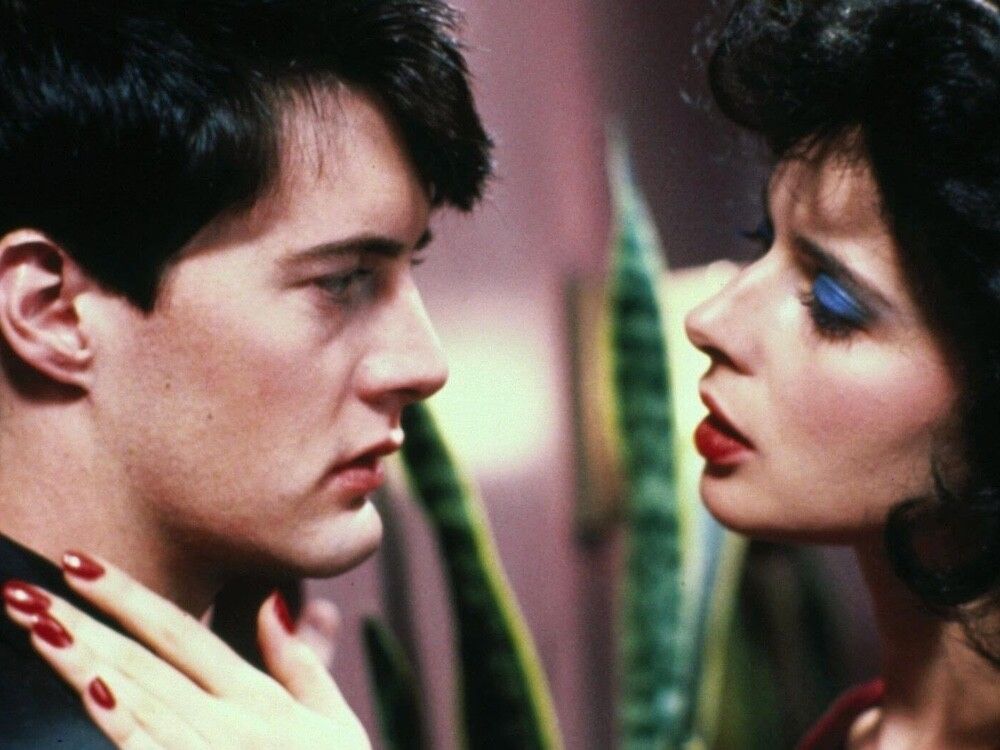
And yet beneath this polished surface, another anxiety simmered. David Lynch’s Blue Velvet (1986) exposed the rot and violence under the manicured lawns and white picket fences of American suburbia. The film moves between sun‑washed suburban calm and sudden eruptions of violence— the eighties’ hidden nightmare. Meanwhile, from the impoverished neighborhoods of New York there emerged a new and revolutionary sound: hip-hop. Groups like Public Enemy and N.W.A. used the technique of “sampling” old sounds and combining them with sharp, political lyrics to effect what Bob Dylan had done before them in the sixties. They shouted the reality of life on the margins without embellishment. Hip‑hop gave voice to those excluded from Reagan’s “Morning Again in America.” Built on recycling the past, it anticipated a future of cultural production in which new work emerges through the reassemblage of existing material.
From that thrown bone to hip-hop samples, three decades passed. Three decades in which sound and image came together to narrate the story of a culture: a story moving from hope to betrayal, unity to fragmentation, depth to surface. We live today in the world borne out of these decades. Where every individual, smartphone in hand, can be the director of their own life’s film and the DJ of its soundtrack. We no longer go to the cinema to forget reality; we live and breathe film 24/7. And its soundtrack is playing incessantly. Forget it, Jake, it’s MTV.





Leave a comment